
Terrarium Basics
A “terrarium” is an overarching term used to describe a number of different enclosed, indoor houseplant setups - they can be open or closed, big or small, and can house all kinds of living things. Your terrarium setup could include water sections (paludarium) or be all land, and can simulate tropical, temperate, or desert biotypes.
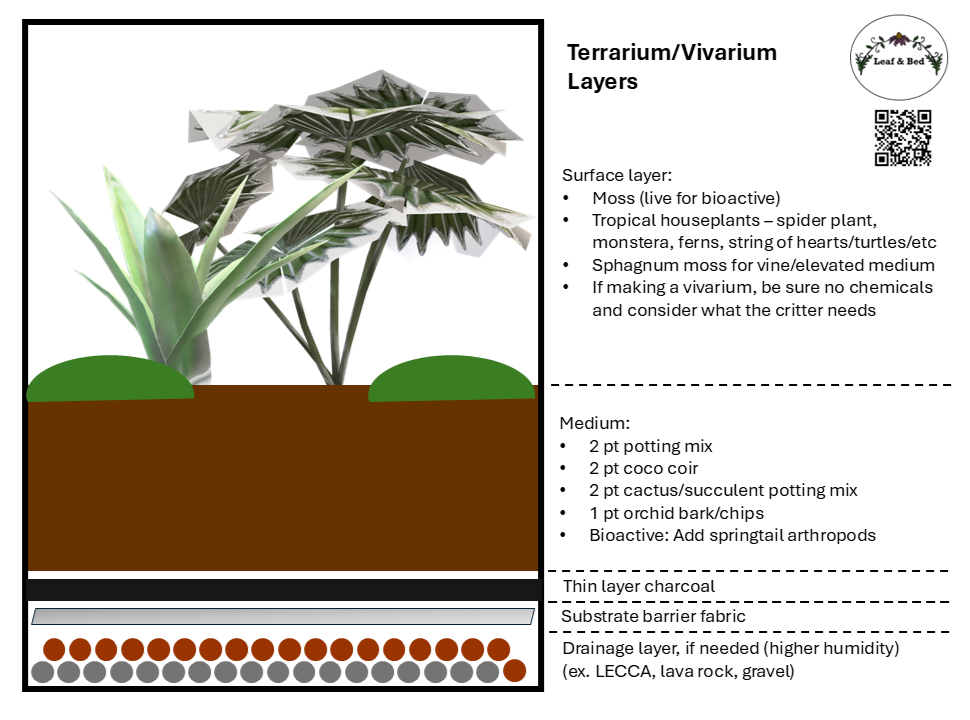
Above: Common layers in a terrarium
Typical Layers
Each terrarium has its outer container of either clear glass or plastic to let light in, air, vegetation and decoration layers, substrate, and sometimes a drainage barrier and layer at the bottom.
Bioactive
The goal of a bioactive terrarium is to create a balanced ecosystem that mostly takes care of itself. They do this by including a cleanup crew that breaks down mold, waste, and old leaves, making care of your terrarium much easier and less frequent. The cleanup crew eats the unwanted waste, breaking it down into nutrients that the plants use as fertilizer to grow, and the plants release oxygen for the cleanup crew and other critters inside.
Cleanup crew species could be springtails, isopods (AKA roly-polys or armadillo bugs), other invertebrates. If you see tiny white specs or “worms” crawling and jumping around, those are part of your terrarium team! Sometimes fungus gnats make their way into terrariums by the plants you add or by flying in from other places. This usually does not cause a health issue for the terrariums, especially since other critters can out-compete or eat the gnats. However If you see more and more gnats, your terrarium might be out of balance and you may want to consider removing them.
Most Leaf & Bed and Oak Branch Grove terrariums are bioactive with springtails only, however some larger setups and ones that house larger living creatures may include species of isopods.
Materials
You want to choose materials that are safe for critters and will not break down in light and humidity. There are many reputable terrarium, aquarium, and exotic pet businesses who sell high-quality decorations, adhesives, plants, and animals. Reach out to Leaf & Bed for a free short list of sellers based on your setup needs.
Water and Drainage Layer
You want to set up and water your terrarium based on the “biotype” you are simulating. Desert setups include more sand and need less frequent water, while tropical setups have rich substrate that holds the additional moisture required to keep relative humidity high. Open terrariums need to be watered frequently, sometimes needing a heavy mist up to once per day. Closed terrariums can sometimes go for weeks, months, or even years without needing additional water in a bioactive setup.
Always choose a mineral-free and chemical-free type of water, such as reverse osmosis (RO), distilled, or ionic filtration such as the ZeroWater brand. This prevents minerals from building up on the walls and substrate and gives your terrarium life clean, fresh water.
However, water that is sitting in the terrarium for too long without being used by the living things inside, or evaporating into water vapor, can cause the substrate to break down, get moldy, and release harmful components. To help with this, most tropical and even some temperate terrariums include a drainage layer, which keeps the excess water you add away from the substrate. If this water level gets close to the substrate, you can use small tubing to drain it, but often plant roots will grow down into the drainage layer over time and soak it up.
Light and Air Flow
Never put your terrarium in direct sunlight! The heat generated can kill your terrarium life. Terrariums want indirect light like you get from a north-facing window, or out of the direct line of sunlight coming in from east, west, or south facing windows. Another great option is using grow lights, which provide full-spectrum lighting that can be set on a timer based on your plants’ and animals’ needs. Be sure to use lights rated for the humidity and watering you will use and monitor for any fire hazards.
A closed terrarium set up and planted properly will provide enough oxygen to keep the system balanced. “Macrofauna” such as frogs, jumping spiders, praying mantises, and more will require different amounts of humidity and air flow in closed terrariums, so research your species BEFORE you purchase and set up your terrarium so that you are providing the environment they need. You can always reach out to Leaf & Bed for help!
Maintenance
If you have a bioactive setup, you may only need to do basic maintenance like wiping down the sides of the terrarium once a month or less! Setups that are not bioactive will require removing old leaves, clearing up mold blooms, lightly fertilizing plants, and more.
Enjoying Your Terrarium
Caring for any living things can be a rewarding hobby, a nice way to connect with nature, and provide rich decoration in your home or business, so keep them out where you and other can enjoy them - and not forget to water them! Leaf & Bed is always here to help you design, shop for quality materials, assemble, and troubleshoot whatever you might be experiencing with your setup.